Where You Come From: How Visiting Your Family's Homeland Rewrites Your Sense of Self
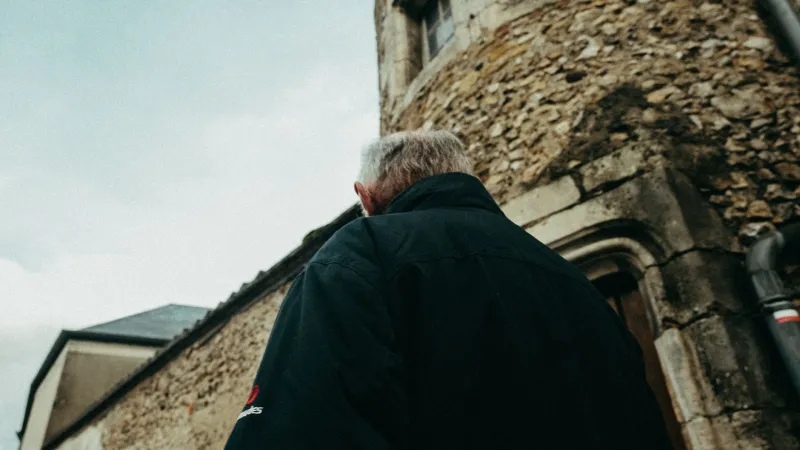
Something shifts when you stand on a street your grandmother walked as a child. It's not nostalgia exactly — you were never there before. It's something harder to name. A kind of recognition that bypasses logic and lands somewhere deeper, somewhere that's been waiting quietly your whole life.
For a growing number of Americans, this experience has a name: the ancestry trip. And it's becoming one of the most emotionally significant forms of travel people are taking right now.
It's Not Tourism. It's Something Else Entirely.
Most travel starts with a place on a map. Ancestry travel starts with a question — Who were these people? And what does that make me?
That shift in motivation changes everything about how the journey unfolds. You're not chasing a bucket list or hunting for the best photo angle. You're looking for something less tangible and, often, more lasting. Researchers who study identity and travel have noted that heritage trips activate a psychological process that's distinct from recreational tourism — one that involves re-examining personal narrative, not just collecting experiences.
When you visit the region your family fled during a famine, or the neighborhood your great-grandparents crowded into after arriving at Ellis Island, or the village in Oaxaca your mother grew up in before crossing the border — you're not just sightseeing. You're doing a kind of archaeology on yourself.
Why Americans Are Drawn to This Now
The United States is a country built almost entirely on displacement and migration. That means most American families carry a geography somewhere in their past — a place they left, a place that was taken, a place that exists now only in family stories and old photographs.
For generations, many immigrant families actively discouraged looking backward. Assimilation meant forward motion. Learn English. Lose the accent. Don't talk about the old country. And for a long time, that worked — at least on the surface.
But something has shifted in recent decades. Americans are increasingly hungry for rootedness in a culture that can feel frictionless and unmoored. The explosion of DNA ancestry kits, genealogy apps, and services like 23andMe and Ancestry.com reflects something real: people want to know where they fit in the longer story of a family, a people, a place.
The next step — actually going there — is where things get genuinely transformative.
What the Trip Actually Feels Like
Talk to people who've made this journey and you'll hear the same words repeated: surreal, overwhelming, like coming home to a place I've never been.
A woman from Chicago who visited her grandparents' village in Sicily described walking into the church where her grandmother was baptized and feeling an almost physical weight settle over her — not grief exactly, but something adjacent to it. "I kept thinking, she stood right here. And then she left. And I would never have existed if she hadn't."
A man from Houston who traveled to Jalisco, Mexico — the state his parents left in their twenties — said the trip rearranged something in how he understood his own ambition. "My parents sacrificed so much to give me options they never had. Being there made that real in a way family stories never quite could."
These aren't isolated reactions. They're patterns.
The Emotional Mechanics of Ancestral Travel
Psychologists who study identity development describe a concept called narrative identity — the ongoing story we tell ourselves about who we are and how we got here. Ancestry trips have a way of expanding that narrative backward in time, connecting our personal story to something larger.
When you walk the streets your ancestors walked, you're not just collecting information. You're integrating it. You're making the abstract — family history, cultural identity, the weight of migration — physically real. And physical reality has a way of sticking.
There's also something powerful about what these trips reveal about choice. Understanding what your ancestors left behind — the beauty of the landscape, the tightness of the community, the food, the language — makes their decision to leave feel more complex and more human. It stops being a backstory and becomes a sacrifice you can feel.
How to Make the Most of This Kind of Trip
Ancestry travel rewards preparation, but not over-planning. Here are a few ways to go deeper:
Do the research before you go. Use genealogy records, old letters, immigration documents, even Google Street View to locate specific addresses if you can. Knowing the name of a village or neighborhood makes the trip exponentially more meaningful than arriving with just a general region.
Talk to family before you leave. Grandparents and older relatives are living archives. Ask them what they remember — smells, sounds, the names of neighbors. Even if their memory is patchy, what they do remember will color what you see.
Hire a local guide who specializes in heritage tourism. Many regions with strong emigration histories — southern Italy, Ireland, Mexico, Poland, West Africa — have guides specifically trained to help diaspora visitors connect with local records, cemeteries, and community members.
Give yourself unstructured time. The most powerful moments on these trips rarely happen on a schedule. Budget time to just sit in a square, eat at a local restaurant, walk without a destination. Let the place come to you a little.
Bring something to document your experience. Not for Instagram — for yourself. A journal, a voice memo app, a disposable camera. These trips tend to generate feelings that are hard to process in the moment. Having a record helps.
The Thing You Bring Home
Most travelers come back from these trips quieter than they expected. Not sad, not disappointed — just more settled. Like something that was slightly out of focus has sharpened.
You understand your family differently. You understand your own face differently — why you look the way you look, why you value what you value, why certain things make you feel at home. You carry a longer story than you realized.
That's the thing about pilgrimage. It's not about the destination. It's about who you are when you finally stop moving and stand in the place that made you possible.
Some places on the map are just places. And some places are yours — even if you're visiting them for the very first time.


