Same Week, Same Place, Every Year: How an Annual Travel Ritual Rewires the Way You Feel Time Passing
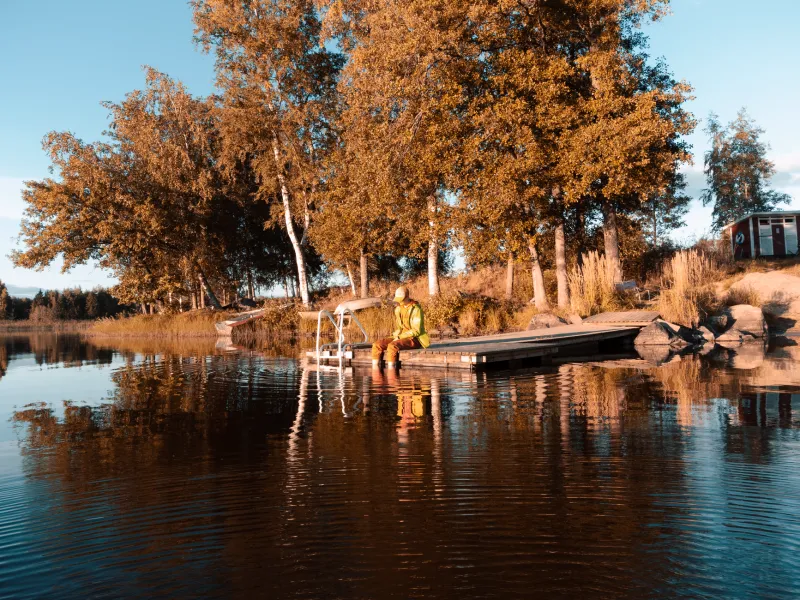
There's a particular kind of person who books the same rental cabin on the same lake in Vermont every October. They don't scroll through Airbnb looking for something new. They don't wonder if maybe this year they should try the Smokies or the Berkshires instead. They just go back. And when you ask them why, they'll usually pause before answering — because the reason is harder to explain than you'd expect.
It's not laziness. It's not lack of imagination. It's something closer to a ritual. And once you've experienced it, spontaneous travel starts to feel like it's missing something.
The Difference Between a Vacation and a Ritual
Most of us think about travel as a break from routine — something that works precisely because it's different from ordinary life. New city, new food, new faces. That novelty hit is real, and it's genuinely valuable. But there's a ceiling on what novelty alone can give you.
A ritual is something else entirely. When you return to the same place at the same time each year, you're not just taking a trip — you're creating a fixed point in an otherwise chaotic calendar. Psychologists who study autobiographical memory have noted that our sense of time is heavily shaped by landmarks: events and experiences we use to mentally organize the years. Most of us rely on life milestones for this — weddings, job changes, moves. But an annual travel ritual creates something rarer: a chosen landmark, one you build deliberately, year after year.
That Cape Cod cottage your family rents every August? It's not just a vacation. It's a measuring stick for your life.
You Notice Things You'd Never See on a First Visit
Here's something that doesn't get talked about enough in travel writing: the first time you visit a place, you're mostly just orienting yourself. You're figuring out where things are, what the vibe is, whether the coffee shop on the corner is worth returning to. You're building a mental map from scratch, which takes real cognitive energy.
By the third or fourth annual visit, that mental map is already there. You're not spending attention on logistics. You're present in a way that first-timers almost never are.
You start noticing the things that change — and the things that don't. The diner that finally closed. The new mural on the side of the bookstore. The way the light hits the water at 6pm in early September versus how it looked last year. These details are invisible to the first-time visitor. To the returning pilgrim, they're everything.
There's a small coastal town in Maine — you probably know the type — where regulars will tell you that the real joy isn't the lobster rolls or the rocky beaches. It's watching the town breathe through seasons you've witnessed before. You become, in a quiet way, part of its story.
The Psychological Anchor You Didn't Know You Needed
Life in the US moves fast. Most Americans report feeling like the years blur together — that January to December seems shorter every time around. Part of that is neurological: as we age and accumulate more repetitive experiences, our brains compress time. Novelty slows perception down; sameness speeds it up.
But here's the counterintuitive thing about an annual travel ritual: even though you're returning to the same place, the experience itself is never identical. You're a slightly different person each time. The people you bring with you have changed. The world outside that destination has shifted. So your brain gets the best of both worlds — the comfort of familiar context and the stimulation of noticing what's new within it.
Think of it like a song you've heard a hundred times. You know the melody, so your brain isn't working to track the structure. Instead, you hear the lyrics differently. You catch the guitar line you missed before. Familiarity doesn't dull the experience — it deepens it.
For families especially, this effect is profound. Parents who take their kids to the same beach town every summer describe it as watching their children grow up in fast-forward. The kids who were too small to swim past the break are suddenly the ones teaching their cousins. Those trips become a living archive.
How to Build Your Own Annual Ritual
You don't need a family tradition passed down through generations to start this. You can begin one right now, from scratch.
Pick a place that has layers. A destination with only surface-level appeal will wear thin after two or three visits. Look for somewhere with enough texture — cultural, natural, culinary, historical — that repeated visits keep revealing new things. Small cities, mountain towns, coastal communities, and national park gateway towns tend to work well for this.
Lock in the same general window. The seasonal consistency matters more than you might think. Going back in the same month or week each year means you're experiencing the destination in the same light, the same weather patterns, the same local rhythms. That consistency is what creates the temporal anchor.
Give yourself permission to repeat. This sounds obvious, but it's actually a mental shift for many American travelers who've absorbed the idea that every trip should be somewhere new. Returning somewhere isn't a failure of ambition. It's a different kind of ambition — one aimed at depth rather than breadth.
Document it, but lightly. A few photos, a journal entry, maybe a small object from each visit. Not to perform the experience for social media, but to build a personal archive you can actually revisit. Ten years from now, those artifacts will hit differently than any Instagram grid.
What You're Really Collecting
Travel culture in the US tends to reward the collector mentality — how many states have you been to, how many countries, how many bucket list items checked off. That's a valid way to experience the world, and nobody's saying abandon it entirely.
But the annual pilgrimage offers something the checklist never can: continuity. A through-line in your life that you chose, that you return to, that holds the shape of who you've been and who you're becoming.
The people who go back to the same place every year aren't stuck. They're building something. And after enough trips, what they've built starts to feel less like a vacation habit and more like a second home — not a physical one, but an emotional one. A place in time that belongs to them.
Maybe the most adventurous thing you can do isn't find somewhere new. Maybe it's go back, and actually see what's there.