Four Seasons, One Place: How Visiting the Same Destination Year-Round Unlocks Its True Soul
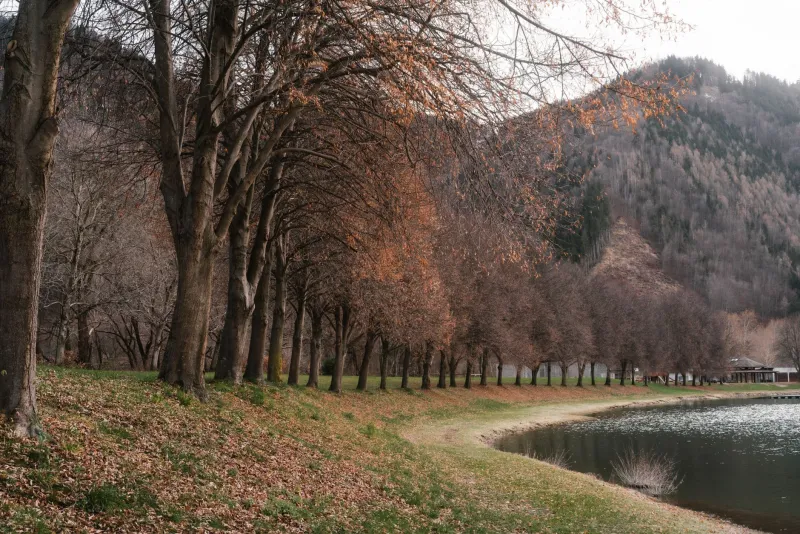
There's a version of Asheville, North Carolina that smells like woodsmoke and hot cider, where the Blue Ridge Parkway turns into a tunnel of amber and rust and every overlook feels like it was painted by hand. Then there's the Asheville that exists in July—humid, buzzing with street musicians, the kind of place where you eat outside every single night because why would you ever go inside?
Both are real. Neither one tells the whole story.
Most of us treat travel like a single exposure photograph—one visit, one impression, done. But there's a different way to approach the places that genuinely move you. Call it the pilgrimage effect: the practice of returning to the same destination across different seasons, not to check it off again, but to see what it becomes when the light changes.
Why a Place Is Never Just One Thing
Here's the thing about destinations that travel marketing rarely admits: every place has multiple personalities. The version you experience in peak summer is almost a completely different animal from the one that exists in February. The crowds, the weather, the local rhythms, the smells, the emotional texture of just walking down a street—all of it shifts.
Take the Oregon Coast. In August, it's full of families, kite festivals, and that particular chaos of a beach town in full swing. Come back in January and you'll find something almost unrecognizable—dramatic storm surf, empty stretches of sand, that specific gray-sky quiet where you can actually hear the ocean thinking. Both versions are spectacular. But they ask completely different things of you as a traveler.
This isn't just poetic observation. There's real psychology behind it. Researchers who study place attachment—the emotional bonds people form with locations—have found that repeated exposure across varied contexts deepens the connection significantly. You're not just building memories; you're building a relationship. And like any relationship, it gets richer when you see the other side through different conditions.
The Practical Magic of Off-Season Returns
Beyond the philosophical rewards, there's a pretty compelling practical case for multi-season travel to the same place.
Seasonal pricing is the obvious one. The Vermont inn that costs $350 a night in peak foliage season might run $120 in early March. The crowds at Zion National Park in October versus Zion in late January? Practically a different national park. You get the same geology, the same sweeping canyon views—but with the trails largely to yourself and a dusting of snow on the red rock that makes the whole scene feel almost surreal.
Then there's access. Some of the best versions of famous places are locked behind the off-season. The French Quarter in New Orleans during Jazz Fest is electric, sure—but New Orleans in a slow, warm February has a neighborhood intimacy that the festival crowds simply bury. Locals are actually out. Restaurants have room for you. The city exhales.
And sometimes the off-season is the season. Cape Cod in late September, after the summer crowd clears out? The water's still warm enough to swim, the seafood shacks are still open, and the light goes golden in a way that July never quite manages.
How to Start Building a Multi-Season Relationship with a Place
You don't have to commit to all four seasons right away—that's a long game. Start simpler.
Pick a place that already means something to you. Multi-season travel works best when you have a baseline. A place you've been once and liked is fine. A place you loved is better. The familiarity gives you something to compare against when you return.
Visit during the season that's least like your first visit. If you went in summer, go back in winter. If you went during a festival, go back during a quiet week. The contrast is where the revelation lives. You'll notice things you completely missed the first time—architecture you couldn't see through the leaves, restaurants that only open in the cold months, a hiking trail that's completely transformed by snow.
Stay in the same neighborhood, but try different things. Anchor yourself geographically so you can track what's changed, but leave room to explore what the season makes available. Winter in Santa Fe means different restaurants, different gallery openings, different conversations with locals who are finally unbothered by tourist season.
Talk to people who live there year-round. This is maybe the biggest unlock. Ask a local what their favorite season is and why. Ask what they wish more visitors understood about the place in winter, or in mud season, or in that weird shoulder period between fall and the holidays. You'll get an education that no travel guide can give you.
The Destinations That Reward This the Most
Not every place transforms equally with the seasons. Cities in climates with minimal seasonal variation—Miami, San Diego, Phoenix in terms of general vibe—tend to shift less dramatically than, say, a mountain town in Colorado or a coastal New England city.
The places that tend to reward multi-season pilgrimage the most are those with distinct seasonal identities. Think:
- Great Smoky Mountains — impossibly crowded in fall foliage, but hauntingly beautiful in winter fog and practically a different park in spring wildflower season
- Marfa, Texas — blistering and buzzing in summer, stark and contemplative in January when the art crowd clears out
- Door County, Wisconsin — a cherry blossom destination in spring, a lake town in summer, a ghost town in February that somehow becomes its most authentic self
- Savannah, Georgia — Spanish moss and heat in August, a completely different kind of beautiful during the cool, quiet weeks of January
What You're Actually Looking For
When you commit to knowing a place across seasons, you stop being a tourist in the traditional sense. You become something closer to a regular. The barista at the coffee shop remembers you. You know which parking situation to avoid. You have opinions about the place that aren't borrowed from a listicle.
More than that, you start to understand what makes it it. Every destination has a core identity that persists across all its seasonal variations—a quality of light, a cultural rhythm, a particular way the locals interact with strangers. The seasonal changes are just costumes. Underneath, the place is always itself.
And honestly? That's the whole point of travel, isn't it? Not just to see a place, but to actually understand it. The pilgrimage approach just gives you more chances to get there.