The Trip That Gave You an Answer Before You Even Knew the Question

When the Road Knows More Than You Do
There's a particular kind of traveler who sets off for a weekend in the mountains — or a solo drive down the Oregon Coast, or a long-overdue visit to some small town in the Texas Hill Country — with no bigger agenda than getting away for a few days. No journaling prompts. No wellness retreat itinerary. Just a bag, a rough plan, and the need to be somewhere else for a while.
And then something shifts.
Maybe it happens on the second morning, when the quiet of a place you've never been settles around you differently than the quiet back home. Maybe it's a conversation with a stranger at a coffee counter in Marfa, or a long hike in the Smokies where the trail just keeps going and your brain finally stops cycling through the same exhausted loop. Whatever the trigger, the experience is the same: you arrived with one version of yourself, and somewhere in the middle of the trip, you got an answer to a question you didn't even know you'd been asking.
This isn't mysticism. It's one of the most quietly documented phenomena in travel — and it's more common than people let on.
The Weight You Don't Know You're Carrying
Psychologists have long noted that our brains don't process big, emotionally loaded questions well when we're embedded in the routines that surround them. The job stress, the relationship tension, the creeping sense that something in your life needs to change — these things are hard to see clearly when you're sitting inside them every single day.
Travel interrupts the pattern. It pulls you out of the familiar context where those unresolved questions live, and places you somewhere new — somewhere your brain isn't on autopilot, somewhere every small thing requires a little more attention. And in that gap, something loosens.
Travelers describe it in different ways. One woman who took a solo trip to Savannah, Georgia, after months of debating whether to leave her corporate job said she didn't go there to figure anything out. She went because she needed a few days off. But walking through Forsyth Park on her second afternoon, watching the light come through the Spanish moss, she just knew. "I didn't make a pros-and-cons list," she said. "I just understood what I was going to do. Like the city handed it to me."
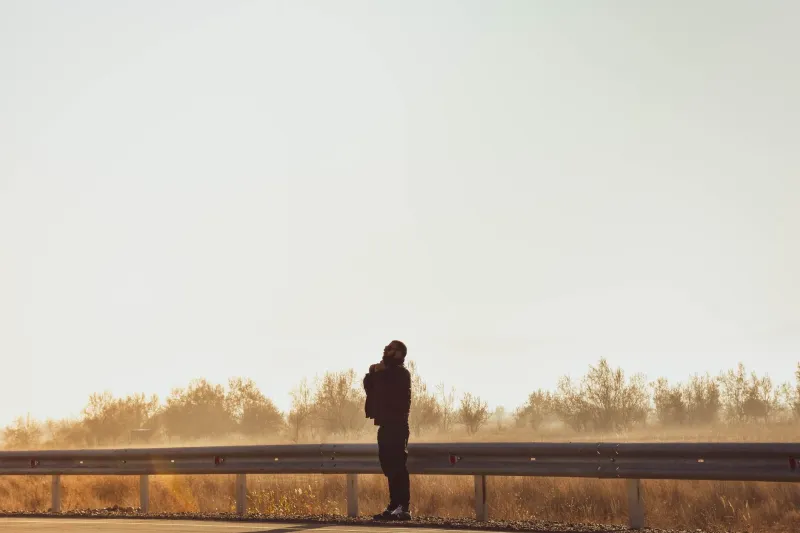
A man who drove Route 66 through New Mexico after a painful divorce described something similar. He wasn't trying to heal. He was trying to move. But somewhere between Albuquerque and Santa Fe, watching the desert stretch out flat and enormous in every direction, he stopped feeling like he was drowning. "The landscape was so indifferent to my problems," he said. "And that was exactly what I needed."
Why Certain Places Crack You Open
Not every destination produces this effect, and that's worth paying attention to. There's something about places that operate at a different scale or pace than your daily life — wide-open natural landscapes, slow and unhurried small towns, cities with a distinct cultural texture that forces you to pay attention — that seems to do the heavy lifting.
Part of it is sensory. New smells, new sounds, new light. Your brain is flooded with novel input, which paradoxically creates space for deeper thinking. Part of it is the removal of your usual social identity. When you're somewhere nobody knows you, you're not performing the version of yourself that your coworkers or family or neighbors expect. You're just a person in a place.
And part of it might simply be time. Travel, especially slower travel, gives you unstructured hours that everyday life doesn't. Hours where you're not required to produce anything, respond to anyone, or make any decisions more consequential than where to eat dinner. In that unscheduled space, the subconscious gets to work.
The Places People Keep Naming
Ask around and certain destinations come up again and again as unexpected clarity-givers. The wide silence of Big Bend National Park in West Texas, where the scale of the landscape makes personal crises feel appropriately sized. The streets of New Orleans, where the city's unapologetic relationship with impermanence — its history of loss and reinvention — seems to give people permission to let go. The coast of Maine, where the cold water and the clean air have a way of stripping things down to what matters.
None of these places are magic. But they each offer something different from ordinary life — a different tempo, a different relationship with time, a different kind of beauty — and that difference is often exactly what a stuck mind needs to get unstuck.
How to Let It Happen
Here's the tricky part: you can't really engineer this. The moment you turn a trip into a self-improvement project, you tend to get in your own way. The travelers who describe these revelatory experiences almost universally say they weren't looking for them.
What you can do is create the conditions. Travel somewhere genuinely new to you, somewhere outside your comfort zone of familiar vacations. Leave more unscheduled time than you think you need. Spend at least a little of that time somewhere without your phone — a trail, a waterfront bench, a long drive on a two-lane road with the radio off. Let the place be what it is, rather than what you need it to be.
And pay attention to the small moments that feel oddly significant. The view that stops you mid-sentence. The stranger's offhand comment that you can't stop thinking about. The morning where you wake up and something that had been heavy suddenly feels lighter.
That's usually where the answer lives.
The Place Was Always the Point
MayPlaces exists because we believe that destinations aren't just backdrops — they're active participants in the stories we tell about our lives. The right place at the right moment can do something that no amount of deliberate self-reflection quite manages: it can show you what you already know but haven't been able to say out loud.
You don't have to be in crisis to experience this. You don't have to be lost. You just have to be willing to go somewhere new and let the place do what places do.
Sometimes the trip you take for no particular reason turns out to be the most important one you've ever taken. And you only understand that on the drive home.