Why Certain Places Feel Like They Belong to You: The Emotional Geography of Life's Biggest Moments
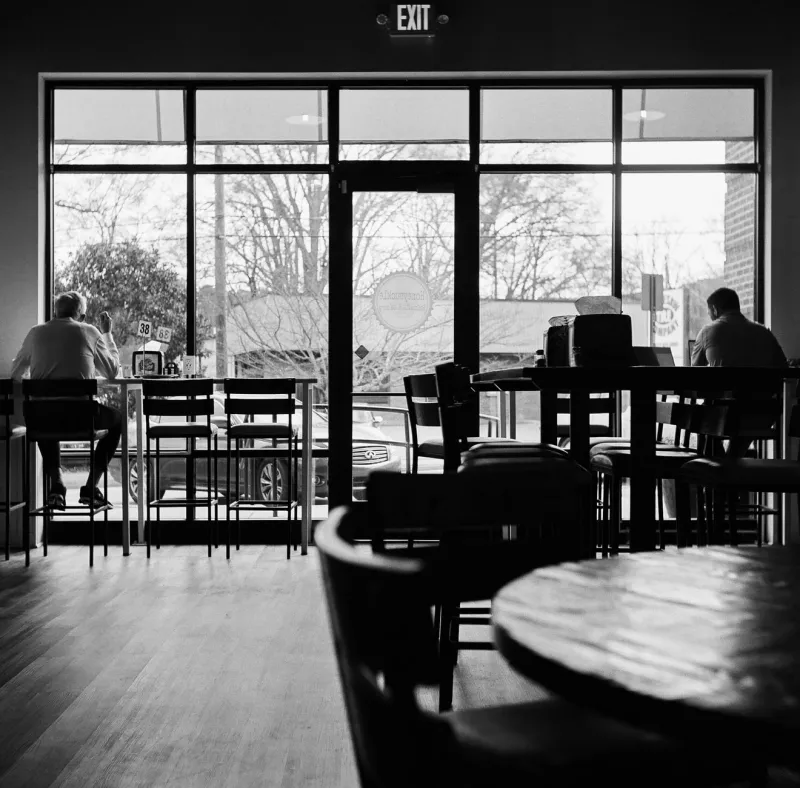
There's a diner in Asheville, North Carolina that a woman named Carla considers the most important building in America. It's not famous. It doesn't have a Michelin star or a line around the block. It has laminate countertops and a rotating pie case and a waitress who calls everyone "hon." But Carla sat in a corner booth there the morning after her mother's funeral, ate a slice of pecan pie she couldn't taste, and watched the fog lift off the Blue Ridge Mountains through a smudged window — and something inside her shifted. She goes back every year. She doesn't entirely know why. She just knows she has to.
Most of us have a place like this. A stretch of beach where you made a decision that changed your life. A city you landed in the week you finally quit the job. A trailhead you reached right after the relationship ended and you needed to prove to yourself you could still move forward, literally. These places didn't earn their significance through guidebook rankings or Instagram aesthetics. They earned it through you — through the specific, unrepeatable version of you that showed up there during a moment of rupture or revelation.
Psychologists call this phenomenon place attachment, but that phrase doesn't quite capture the weight of it. These aren't just places you like. They're places that feel like yours in a way that's almost possessive, almost spiritual. They're your personal sacred ground.
The Moment That Brands the Map
Here's what's happening in your brain when you visit a place during an emotionally charged period: your amygdala — the part responsible for processing intense feelings — is firing on all cylinders. And whatever sensory details surround you during that activation get encoded alongside the emotion itself. The smell of salt air. The particular sound of a city waking up. The color of light at 6 a.m. in the desert.
This is why, years later, a similar smell or sound can pull you back so viscerally. The place and the feeling got filed together in the same mental folder. Neuroscientists sometimes describe this as state-dependent memory, and it explains why ordinary locations can carry extraordinary emotional weight for specific people while meaning nothing to everyone else standing in the exact same spot.
For travelers, this process happens more intensely than in everyday life. When you're somewhere unfamiliar, your senses are already heightened. You're paying attention in a way you don't at home. Which means you're also more emotionally porous — more open to being marked by what's happening around you and inside you simultaneously.
Stories from the Road: When Ordinary Places Become Personal Monuments
Marcus drove from Chicago to Marfa, Texas the week he turned forty and realized he had no idea what he actually wanted from his life. He'd planned the trip vaguely, mostly to get distance. He ended up spending three days in that strange, spare West Texas art town, walking the flat landscape at dawn, eating breakfast tacos in near-total silence, staring at Donald Judd's aluminum boxes in the desert and feeling — for the first time in years — like not knowing was okay. He's been back twice since. Each time, he says, Marfa asks him a question he didn't know he needed to answer.
Then there's Jenna, who graduated college in May and immediately boarded a train to Portland, Oregon because she'd always wanted to go and suddenly had no reason not to. She was terrified and elated and completely unmoored. She spent a week there, walking the city, eating at food carts, sitting in Powell's Books for hours. She found her first real job listing on a laptop in a coffee shop on Hawthorne Boulevard. Portland, she says, is where she became an adult. She moved back years later, in part, because it felt like returning to the scene of her own becoming.
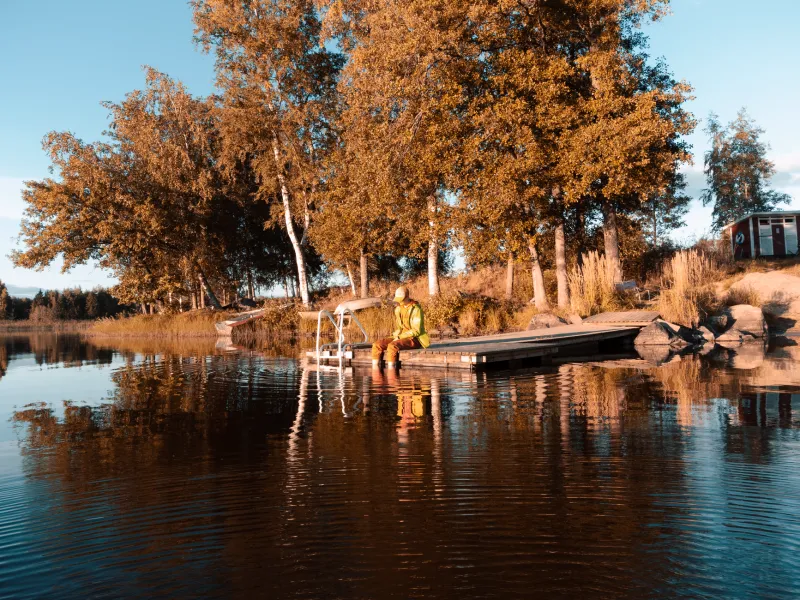
And then there's Derek, who took his late father's ashes to a lake in northern Minnesota — a place they'd fished together every summer throughout his childhood — and scattered them at dawn from a rented canoe. He's gone back every summer since, always to the same lake, always at dawn. He doesn't fish anymore. He just sits on the water. The lake, he says, is where his dad still lives.
Why You Keep Going Back
Returning to a place that holds emotional weight is one of the most misunderstood travel impulses there is. People sometimes frame it as being stuck — like you're chasing something you can't let go of. But that's not quite it. What most repeat pilgrims describe is something more like checking in with themselves. The place becomes a mirror. The you who shows up this time is always different from the you who showed up last time, and the contrast tells you something true about how you've changed.
Carla goes back to that Asheville diner not to relive her grief, but to measure the distance she's traveled from it. Marcus returns to Marfa not because he's still lost, but because the landscape still makes him honest with himself in a way that's hard to replicate elsewhere. These places function as personal benchmarks — geographic mile markers on the longer journey of a life.
There's also something about the act of choosing to return that matters. It's a small declaration. You're saying: this place was part of something real. I'm not going to pretend it wasn't.
How to Let a Place Become Sacred
You can't force this, and you shouldn't try. The emotional geography of a life gets made in the doing, not the planning. But there are a few things worth knowing.
First, pay attention when you're in a place during a significant moment. Not performatively — don't stop to document everything. Just notice. The way the light falls. What you can smell. The texture of the chair you're sitting in. Let the place into you a little. That's what makes the memory stick.
Second, don't dismiss the pull you feel to return somewhere that mattered. That pull is information. It's your nervous system telling you there's unfinished business — not the anxious kind, but the kind that wants to be witnessed and integrated.
Third, when you do go back, resist the urge to recreate the original experience exactly. Go to the same place, but let it be different. Eat at the same diner, but order something new. Walk the same trail, but at a different pace. The point isn't to relive — it's to compare, to update, to let the place reflect who you are now instead of who you were then.
The Map Only You Can Read
Every serious traveler eventually accumulates a private geography — a personal map of places that hold meaning no one else can fully see. A parking lot in Savannah where you made a phone call that changed everything. A stretch of highway in Utah you drove through crying and somehow came out the other side feeling lighter. A hotel room in New Orleans where you wrote in your journal for three hours and figured out what you actually believed.
These places aren't on any official list. They won't show up in a search for the top ten destinations of the year. But they're the realest travel you've ever done — the trips where the destination and the moment fused into something permanent.
MayPlaces is built on the idea that travel is how we discover the world. But sometimes, the world we're discovering is ourselves — and the map of that journey is written in places that, for everyone else, are just places. For you, they're something else entirely. They're proof you were here, that something happened, that you moved through it and came out changed.
That diner in Asheville. That lake in Minnesota. That strange, quiet town in the West Texas desert.
Sacred ground doesn't have to be ancient. Sometimes it's just the place that was there when everything shifted.