Wrong Turn, Right Place: The Traveler's Guide to Getting Gloriously Lost
Photo: Unknown author, CC BY-SA 2.5, via Wikimedia Commons
There's a certain kind of traveler who color-codes their itinerary. Every restaurant is booked, every museum timed, every hour accounted for. And honestly? There's nothing wrong with that. But somewhere between the third scheduled stop and the pre-researched "hidden gem" that appears in every travel blog, something gets lost — the actual feeling of discovery.
The best travel story you've ever heard from a friend probably didn't start with "so I followed the itinerary exactly." It probably started with "we took a wrong turn" or "we just kind of wandered." That's not a coincidence.
At MayPlaces, we spend a lot of time thinking about what makes a place feel worth visiting. And increasingly, the answer has less to do with the destination itself and more to do with how open you are when you arrive.
Why Detours Hit Different
There's actual psychology behind why unplanned discoveries feel so meaningful. When we stumble onto something — a sun-bleached diner on a two-lane highway in West Texas, a jazz bar tucked into a New Orleans alley you weren't supposed to be in — we feel like we earned it. Nobody put it on a list for us. It just happened, and we were present enough to notice.
Planned travel is consumption. Spontaneous travel is participation.
That's not a knock on planning — good research genuinely matters, especially when you're navigating safety, budget, or limited time. But there's a real cost to over-scheduling: you stop looking around. You stop saying yes to the thing you didn't know to look for.
Building Flex Into Your Framework
The secret isn't to throw your plans out the window. It's to design them with breathing room.
Try this: for every day of travel, leave at least two hours completely unscheduled. No restaurant booked, no attraction lined up. Just time. Walk in a direction that feels interesting. Ask your hotel front desk what they actually do on weekends. Wander into a neighborhood that isn't mentioned in your guidebook.
Another approach is what some travelers call the "one rule" method. Pick one constraint for the day — say, you can only eat somewhere with no online presence, or you have to say yes to any local recommendation you receive before noon. Rules like this sound restrictive but actually function as permission slips. They give you a reason to try the thing you'd normally overthink.
Real Detours, Real Discoveries
Ask around and you'll find these stories everywhere.
A couple driving from Nashville to Asheville took a back road to avoid construction and ended up in a small Tennessee town mid-festival. They stayed an extra night, danced to a bluegrass band they'd never heard of, and still talk about it years later.
A solo traveler in New Mexico pulled off the highway because a hand-painted sign said "hot springs" with an arrow. No reviews, no parking lot, no amenities. Just a trail and a pool of warm water at the end of it, completely empty on a Tuesday afternoon.
A family road-tripping through the Pacific Northwest missed a ferry and, with two hours to kill in a small coastal town, found a gallery run by a local artist who ended up giving them a personal tour. They bought a painting that now hangs in their living room.
None of these moments were on anyone's itinerary. All of them became the highlight of the trip.
Practical Ways to Stay Safe While You Wander
Embracing the unknown doesn't mean being reckless. A few habits make spontaneous exploration both safer and more rewarding.
Download offline maps before you go. Google Maps and Maps.me both let you save regions for offline use. If you're wandering without signal, you'll still know roughly where you are.
Tell someone your general plan — even if that plan is "I'm going to drive around this area today and see what happens." A rough zone and an expected check-in time is enough.
Keep a small cash reserve. Unexpected finds — a roadside market, a cash-only diner, a parking lot that doesn't take cards — are easier to say yes to when you're not scrambling.
Trust your instincts about people and places. Spontaneity is a great tool; ignoring your gut is not. There's a difference between a detour that feels exciting and one that feels wrong. Honor that distinction.
Keep your gas tank above a quarter full when driving through rural areas. It sounds obvious, but it's the kind of thing that bites you when you're 40 miles from the last town and committed to a scenic back road.
The Art of Asking the Right Questions
Locals are the most underused resource in travel. Most visitors are too intimidated or too scheduled to really tap into what they know.
The trick is asking specific questions instead of broad ones. "What should I do here?" gets you a list of the same things you already Googled. But "where do you go when you want to feel like yourself?" or "what's something most visitors completely miss?" — those questions open doors.
Bartenders, gas station attendants, park rangers, the woman at the farmers market who's been selling there for 20 years — these are your people. Give them a real question and you'll often get a real answer.
Letting the Place Lead
Here's the thing about the most memorable detours: they don't feel accidental in hindsight. They feel inevitable. Like that place was always going to be part of your story — you just had to leave enough room in the schedule for it to show up.
The world is full of places that don't have a strong Instagram presence or a Michelin star or a feature in a major travel publication. Some of those places are extraordinary. You'll never find them if you only go where the algorithm points.
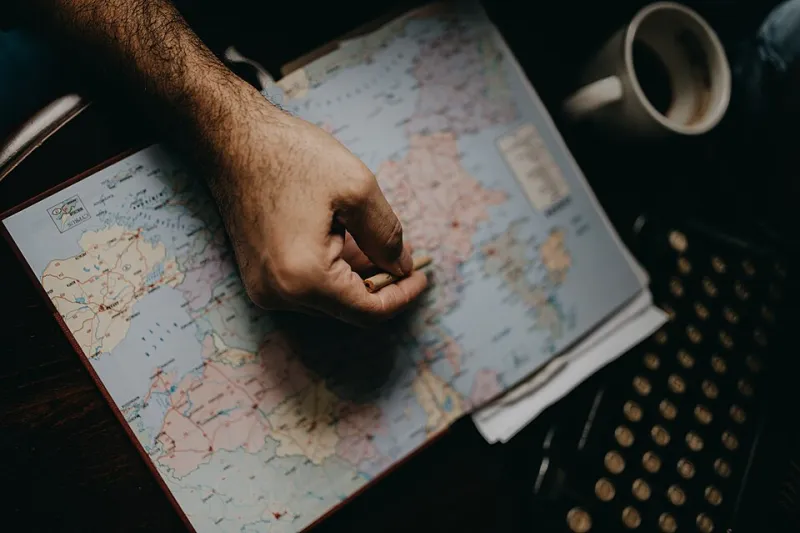
So plan your trip. Do your research. Book the things worth booking. And then — leave some of the map blank. That's where the good stuff lives.